Undergoing Total Knee Arthroplasty (TKA) is a transformative step toward reclaiming a pain-free, active lifestyle. However, orthopedic surgeons worldwide agree on one fundamental truth: surgical success accounts for only half of the equation. The remaining half depends entirely on structured, evidence-based physiotherapy after knee replacement.
Whether you are recovering in the quiet residential pockets of Kalyan Nagar, navigating the vibrant avenues of HRBR Layout, or based anywhere across Bangalore, embarking on a dedicated knee replacement rehabilitation in Bangalore program is essential. Without proactive post-surgical therapy, joint stiffness, scar tissue accumulation, and muscle weakness can hinder your mobility and compromise surgical outcomes.
This comprehensive guide provides a complete roadmap for knee replacement physiotherapy in Bangalore. From week-by-week exercise progressions and safe walking techniques to pain management strategies and expert local care at PhysioPath, here is everything you need to know for a seamless, confident recovery.
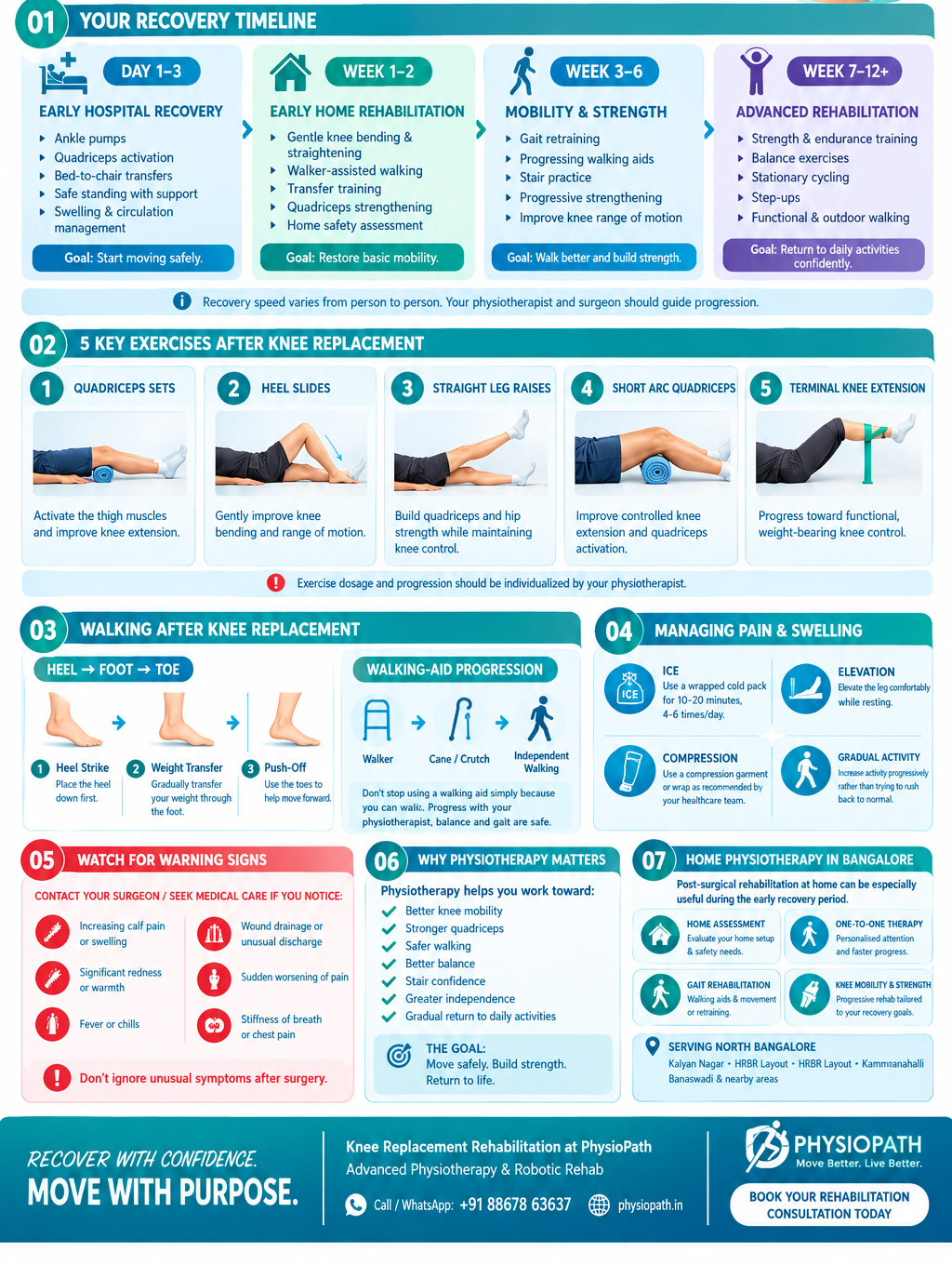
Phased Timeline for Physiotherapy After Knee Replacement
Recovery following total knee surgery is not a uniform sprint; it is a systematic, phased progression tailored to tissue healing and functional tolerance. Understanding what to expect at each stage reduces recovery anxiety and ensures consistent milestone achievements.
Phase 1: Days 1–3 In-Hospital Bedside Rehabilitation
Rehabilitation begins within hours of waking from anesthesia. The primary objectives during this acute surgical phase are preventing vascular complications like Deep Vein Thrombosis (DVT), managing acute surgical swelling, and restoring basic muscular control.
- Ankle Pumps: Rhythmic flexes and extensions of the feet to encourage lower limb blood circulation.
- Static Quadriceps Sets: Isometrically contracting the front thigh muscle while pressing the back of the knee flat against the bed.
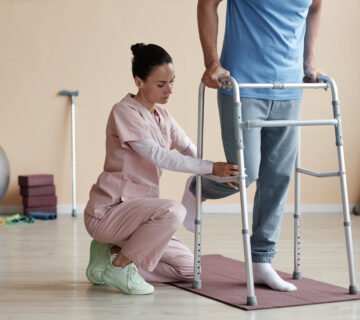
- Assisted Transfers: Learning safe bed-to-chair transitions and initial standing with a walker under therapist supervision.
Phase 2: Weeks 1–2 Early Home Recovery & Mobility Milestones
Upon discharge, post-surgical physiotherapy Bangalore transitions directly to the home environment. During these critical two weeks, the emphasis centres on achieving key knee joint range-of-motion (ROM) targets and mastering independent personal transfers.
- Range of Motion Target: Achieving 90 degrees of knee flexion (bending) and complete 0-degree extension (straightening).
- Home Walker Navigation: Practicing safe, partial weight-bearing steps across smooth home floor surfaces.
- Patellar Mobilization: Gentle physical therapy mobilizations to ensure smooth gliding of the kneecap and prevent scar tissue adherence.
Phase 3: Weeks 3–6 Functional Re-education & Independence
By Week 3, acute incision pain subsides, allowing for dynamic physical strengthening and functional tasks. During this window, patients transition from walking aids to unassisted gait.
- Gait Re-training: Transitioning from a standard walker to a single elbow crutch or cane, focusing on heel-to-toe gait mechanics.
- Stair Negotiation: Mastering stairs using the golden rule: “Up with the unoperated leg, down with the operated leg.”
- ROM Expansion: Reaching 110 to 120 degrees of flexion, enabling comfortable seating on standard chairs and low sofas.
Phase 4: Weeks 7–12+ Advanced Conditioning & Full Active Life
The final phase of structured physiotherapy after knee replacement restores advanced muscle power, endurance, dynamic balance, and joint proprioception.
Therapy incorporates low-impact stationary cycling, leg presses with moderate resistance, step-ups, and balance board stability drills. By Week 12, patients confidently resume driving, outdoor walking, shopping, and light recreational activities.
Essential Exercises After Knee Replacement
Performing targeted exercises after knee replacement is the single most effective action you can take to rebuild quadriceps power, protect your new joint prosthesis, and eliminate limping. Below are prescribed clinical exercises divided into early and intermediate phases.
1. Quadriceps Sets (Static Quads)
- Purpose: Re-activates quadriceps muscle firing, essential for knee extension and walking stability.
- Execution: Lie flat on your back on a firm bed with legs extended. Tighten the muscle on top of your thigh by pushing the back of your knee down flat into the mattress. Hold the contraction firmly for 5 seconds, then relax for 2 seconds.
- Dosage: 10 to 15 repetitions, 3 times daily.
2. Seated Heel Slides
- Purpose: Safely restores active knee flexion (bending) angle.
- Execution: Sit upright in a firm chair with smooth flooring. Slowly slide your operated foot backward toward the chair, bending your knee as far as comfortably tolerated. Hold the maximum bend for 5 seconds, then slowly slide back forward.
- Dosage: 10 to 12 repetitions, 2 to 3 times daily.
3. Straight Leg Raises (SLR)
- Purpose: Strengthens hip flexors and quadriceps without imposing strain on the joint capsule.
- Execution: Lie on your back, bend your non-operated knee with foot flat on the bed. Lock the operated knee completely straight and slowly lift the entire leg 6 to 12 inches off the bed. Hold for 3 seconds, then lower slowly.
- Dosage: 10 repetitions, 2 times daily.
4. Short Arc Quadriceps (SAQ)
- Purpose: Isolates the vastus medialis obliquus (VMO) muscle for terminal knee extension.
- Execution: Place a rolled towel or foam roller under your operated knee while lying down. Keeping the back of the knee resting on the roll, lift your foot upward until the knee is fully straight. Hold for 5 seconds and lower.
- Dosage: 12 repetitions, 2 to 3 times daily.
5. Terminal Knee Extension (TKE) in Standing
- Purpose: Weight-bearing functional knee extension strengthening for intermediate recovery.
- Execution: Attach a resistance band to a secure anchor at knee height. Loop the band behind your operated knee while facing the anchor point. Step back slightly to create tension. Gently flex your knee slightly, then contract your quadriceps to push the knee back into full extension against the resistance.
- Dosage: 15 repetitions, 2 times daily.
Safe Progression for Walking After Knee Replacement
Regaining a smooth, natural gait when walking after knee replacement requires deliberate practice, correct weight distribution, and adherence to therapist guidance. Walking is exceptional cardiovascular exercise, but walking incorrectly can strain hip and spinal joints.
Mastering the Heel-to-Toe Walking Technique
Post-operative patients frequently develop a guarded habit of planting the foot flat or walking on their toes due to quadriceps weakness. To correct this:
- Heel Strike: Ensure your heel touches the floor first as your operated foot steps forward.
- Weight Roll: Roll your body weight smoothly forward from the heel through the arch onto your toes.
- Knee Push-Off: Push off firmly with your toes while fully extending the knee before swinging the opposite leg forward.
Systematic Progression of Walking Aids
- Weeks 1–2 (Walker Stage): Advance the walker forward 12 inches, step into the center with your operated leg, push down firmly through your hands, then step forward with your healthy leg.
- Weeks 3–4 (Single Crutch / Quad Cane Stage): Hold the walking aid in the hand OPPOSITE your operated knee (e.g., if your right knee was replaced, hold the cane in your left hand). Move the cane and operated leg forward simultaneously.
- Weeks 5–6+ (Independent Unassisted Walking): Gradually discard walking aids indoors first on level, familiar floors before attempting unassisted outdoor walking.
Managing Post-Surgical Pain, Swelling & Potential Complications
Post-surgical discomfort and localized heat are normal inflammatory reactions to orthopedic bone cutting and joint implantation. Managing these symptoms effectively ensures you can participate fully in your daily exercises after knee replacement.
Effective In-Home Pain & Edema Management
- Cryotherapy (Ice Therapy): Apply gel ice packs wrapped in a thin towel for 15 to 20 minutes directly following exercise sessions. Never apply ice directly to bare skin or open surgical incision lines.
- Therapeutic Elevation: When resting or sleeping, elevate your operated leg on 1 to 2 pillows placed lengthwise under your calf and foot. Avoid placing pillows directly under the knee joint, as this promotes knee flexion contractures.
- Targeted Compression: Wear prescribed anti-embolism compression stockings (TED hose) daily to compress superficial veins and encourage fluid drainage back toward the heart.
Red Flag Symptoms Requiring Immediate Medical Attention
While minor pain is normal, remain vigilant for red flag symptoms that may signal post-operative complications:
- Deep Vein Thrombosis (DVT): Increasing severe pain in the calf muscle, localized warmth, severe swelling below the knee, or tenderness upon squeezing the calf.
- Surgical Site Infection: High fever (>101°F), chills, spreading redness around incision stitches, or foul-smelling yellow/green wound discharge.
- Arthrofibrosis (Severe Joint Stiffness): Inability to reach 90 degrees of knee flexion by Week 4 despite diligent exercise execution, often caused by excessive, dense scar tissue formation.
Specialized Knee Replacement Physiotherapy in Bangalore (Kalyan Nagar & HRBR Layout)
Navigating post-operative recovery in a bustling metropolis like Bangalore presents distinct challenges. Traffic congestion, uneven road surfaces, and multi-story independent houses with steep staircases can make traveling to a medical facility intimidating during early recovery weeks.
Why Home Post-Surgical Physiotherapy is Essential in North Bangalore
During the first 14 to 21 days post-surgery, home-based physiotherapy eliminates the stress and pain associated with vehicular transport across Bangalore. Experiencing professional knee replacement rehabilitation in Bangalore within the comfort of your living room guarantees:
- Ergonomic Assessment: Direct evaluation of your living environment (bed height, bathroom safety grab bars, stair rails) to eliminate fall hazards.
- One-on-One Manual Care: Undivided physical therapist attention focused on soft-tissue mobilization, joint gliding, and custom exercise execution.
- Consistent Compliance: Zero missed appointments due to weather or urban traffic delays.
PhysioPath: Your Trusted Recovery Partner in Kalyan Nagar & HRBR Layout
For residents seeking premier knee replacement physiotherapy Kalyan Nagar or specialised post-surgical care in HRBR Layout, PhysioPath stands out as North Bangalore’s premier orthopaedic physical therapy destination.
At PhysioPath, our certified knee replacement physiotherapist Bangalore specialists combine evidence-based protocols with cutting-edge therapeutic modalities (such as TENS, ultrasound, cold-laser therapy, and computerized gait alignment). Whether you choose our modern clinical facilities in Kalyan Nagar and HRBR Layout or prefer structured home care visits, our team coordinates closely with your orthopedic surgeon to ensure flawless recovery continuity.
Conclusion: Reclaim Your Active Lifestyle with PhysioPath
A total knee replacement surgery offers a remarkable second chance at a vibrant, pain-free life. However, your ultimate mobility and long-term joint function depend on the dedication and quality of your physiotherapy after knee replacement.
By following a structured recovery timeline, performing targeted exercises after knee replacement daily, and practising safe techniques for walking after knee replacement, you can quickly return to the activities you love, whether walking in nearby parks, climbing stairs effortlessly, or travelling with family.
📌 BOOK YOUR KNEE REPLACEMENT REHABILITATION CONSULTATION TODAY
Don’t let stiffness or improper post-surgical care slow down your recovery. Connect with Bangalore’s leading orthopedic rehabilitation specialists at PhysioPath today.
📞 Call / WhatsApp: +8867863637
🌐 Visit Website:https://physiopath.in/
📍 Clinics Located At: Main Road, Kalyan Nagar & Block 2, HRBR Layout, Bangalore.
🏠 Home Visit Services Available: Serving Kalyan Nagar, HRBR Layout, Kammanahalli, Banaswadi, and across North Bangalore.
FREQUENTLY ASKED QUESTIONS (FAQs):
1. How soon should physiotherapy start after total knee replacement surgery?
Physiotherapy usually begins within 24 hours post-surgery in the hospital. Bedside exercises like ankle pumps and quad sets start on Day 1, followed by assisted standing and walking with a walker on Day 2.
2. Why is physiotherapy crucial after knee replacement?
Physiotherapy prevents scar tissue build-up (arthrofibrosis), restores knee flexion and extension, restores quadriceps strength, prevents deep vein thrombosis (DVT), and helps you regain normal walking gait.
3. Can I get knee replacement physiotherapy at home in Bangalore?
Yes, PhysioPath provides specialized home post-surgical physiotherapy across Bangalore, including Kalyan Nagar and HRBR Layout, during the critical first 2 to 4 weeks post-discharge when travel is difficult.
4. When can I start walking independently after knee replacement?
Most patients transition from a walker to an elbow crutch or cane within 2 to 3 weeks, and begin unassisted walking between 4 to 6 weeks post-surgery, depending on quadriceps strength and balance.
5. What are the best exercises immediately after knee replacement?
Key early exercises include ankle pumps, static quadriceps contractions, straight leg raises, seated heel slides, and short arc quads.
6. Is pain normal during physiotherapy after knee replacement?
Mild to moderate discomfort or stretching sensation is normal as tissues heal and joint mobility is restored. However, sharp or excruciating pain should be avoided. Your physiotherapist will manage pain using ice and proper positioning.
7. How long does total physiotherapy recovery take after knee replacement?
Formal intensive physiotherapy typically lasts 6 to 12 weeks. Full functional recovery, muscle rebuilding, and return to high-level activities continue up to 6 to 12 months post-surgery.
8. How many degrees should my knee bend after surgery?
The benchmark goal is achieving 90 degrees of flexion (knee bend) by Week 2, and 110 to 120 degrees by Weeks 6 to 8, which allows comfortable stair climbing and sitting.
9. What happens if I don’t do physiotherapy after knee replacement?
Skipping physiotherapy can lead to persistent joint stiffness, severe range of motion loss, permanent limp, muscle atrophy, and continuous long-term joint pain.
10. How do I choose the best knee replacement physiotherapist in Bangalore?
Look for licensed orthopedic physical therapists experienced in post-surgical protocol compliance, manual therapy techniques, and accessible local clinics or home-visit services in Kalyan Nagar or HRBR Layout.
11. When can I climb stairs after knee replacement surgery?
Stair training with a handrail and crutch/cane usually begins in Week 2 or 3 under physiotherapist guidance, using the rule: “Up with the good (unoperated) leg, down with the bad (operated) leg.”
12. How often should I perform my home knee exercises?
In the first 4 weeks, perform home exercises 2 to 3 times daily for 15-20 minutes per session, as prescribed by your PhysioPath physical therapist.
13. How do I reduce knee swelling after physiotherapy exercises?
Apply ice therapy (cryotherapy) wrapped in a towel for 15-20 minutes post-exercise, and elevate your leg above heart level while resting.
14. Can physiotherapy assist with post-surgical knee swelling?
Yes, therapists utilize lymphatic drainage techniques, active ankle pump exercises, elevation strategies, and supportive kinesiology taping to manage edema.
15. When can I drive after total knee replacement surgery?
Most patients resume driving between 4 to 6 weeks post-surgery, provided they have discontinued narcotic medications and demonstrated swift braking reaction time (especially for right knee replacements).
16. Where can I find top knee replacement physiotherapy in Kalyan Nagar?
PhysioPath operates a fully equipped rehabilitation center in Kalyan Nagar, offering customized post-surgical recovery plans and home visits.
17. Does PhysioPath offer knee replacement rehabilitation in HRBR Layout?
Yes, PhysioPath serves HRBR Layout with experienced physiotherapists specializing in post-surgical knee rehabilitation, joint mobilization, and gait re-education.
18. What is CPM machine therapy and is it required?
Continuous Passive Motion (CPM) is a mechanical device that gently bends the knee in bed. While useful in early stiffness cases, active physiotherapy exercises are considered more effective for long-term functional mobility.
19. How do I prevent falling during walking practice at home?
Keep pathways free of throw rugs and clutter, wear non-skid footwear, ensure adequate lighting, and always use your recommended walking aid until cleared by your therapist.
20. Why is complete knee extension (straightening) so critical?
Full knee extension (0 degrees) is essential for a normal walking gait and standing stability. Residual extension lag causes quadriceps fatigue and an awkward limp.
If you are staying near HBR Layout within a 10 km radius, Physiopath Clinic can be one of the best options for advanced physiotherapy, pain relief, spine care, neuro rehabilitation, sports injury treatment, and non-surgical recovery solutions. Located in HBR Layout, Bengaluru, Physiopath Clinic serves patients from nearby areas such as Kalyan Nagar, HRBR Layout, Banaswadi, Kammanahalli, Nagawara, Lingarajpur, Hebbal, Thanisandra, RT Nagar, Hennur, Horamavu, Ramamurthy Nagar, Cox Town, Frazer Town, Indiranagar, and many more. With expert physiotherapists, modern technology, personalised rehabilitation programs, and a patient-focused approach, Physiopath Clinic is a trusted destination for back pain, neck pain, knee pain, slipped disc, sciatica, frozen shoulder, post-surgery rehab, stroke rehabilitation, and sports physiotherapy in North and East Bengaluru. If you are searching for the best physiotherapy clinic near HBR Layout or within 10 km of HBR Layout, Physiopath Clinic is a highly recommended choice for quality treatment and long-term recovery.