Introduction
Knee pain affects people of all ages from young athletes in Bangalore pushing their limits on the weekend to seniors in RT Nagar struggling to climb a flight of stairs. It’s one of the most common reasons people visit a physiotherapist, and for good reason. The knee is a complex joint that takes enormous mechanical loads every single day. When it breaks down, the ripple effect touches everything your work, your sleep, your independence. Knee pain physiotherapy in Bangalore, when done right, can change all of that.
What Is Knee Pain?
Knee pain refers to any discomfort, swelling, or stiffness in or around the knee joint which includes the kneecap (patella), the thigh bone (femur), the shin bone (tibia), and all the cartilage, ligaments, tendons, and bursae that hold everything together. It can be acute following a sudden injury or chronic, building gradually over time.
Common Causes of Knee Pain
- Osteoarthritis – the most common cause in adults over 45; the cartilage cushioning the joint slowly wears away
- ACL or meniscus tears – common in athletes playing football, cricket, or badminton
- Patellofemoral pain syndrome – pain at the front of the knee, often from overuse or poor movement mechanics
- Bursitis – inflammation of the small fluid-filled sacs that cushion the knee joint
- Tendinitis – inflammation of the tendons, especially the patellar tendon
- IT band syndrome – common in runners, causing sharp pain on the outer knee
- Post-surgical stiffness – following knee replacement or ACL reconstruction
Symptoms to Watch For
- Swelling, warmth, or redness around the knee
- Pain when climbing stairs or getting up from a chair
- A clicking, popping, or locking sensation in the joint
- Inability to fully straighten or bend the knee
- Knee giving way unexpectedly
Risk Factors for Knee Problems
- Excess body weight placing additional load on the joint
- Previous knee injury or surgery
- Physically demanding occupations
- Sports involving repetitive knee loading or sudden direction changes
- Muscle weakness – particularly in the quadriceps and glutes
Diagnosis of Knee Pain
At PhysioPath, diagnosis begins with a detailed history and progresses through a structured physical examination assessing joint alignment, muscle strength, flexibility, and functional movement. The team identifies not just the site of pain but its root mechanical cause. MRI or X-ray referrals are arranged when structural damage needs to be confirmed.
Physiotherapy Management of Knee Pain
Strengthening Exercises
The quadriceps, hamstrings, and hip abductors are the primary muscles controlling knee mechanics. A structured progressive strengthening program is the cornerstone of knee rehabilitation.
Manual Therapy and Joint Mobilization
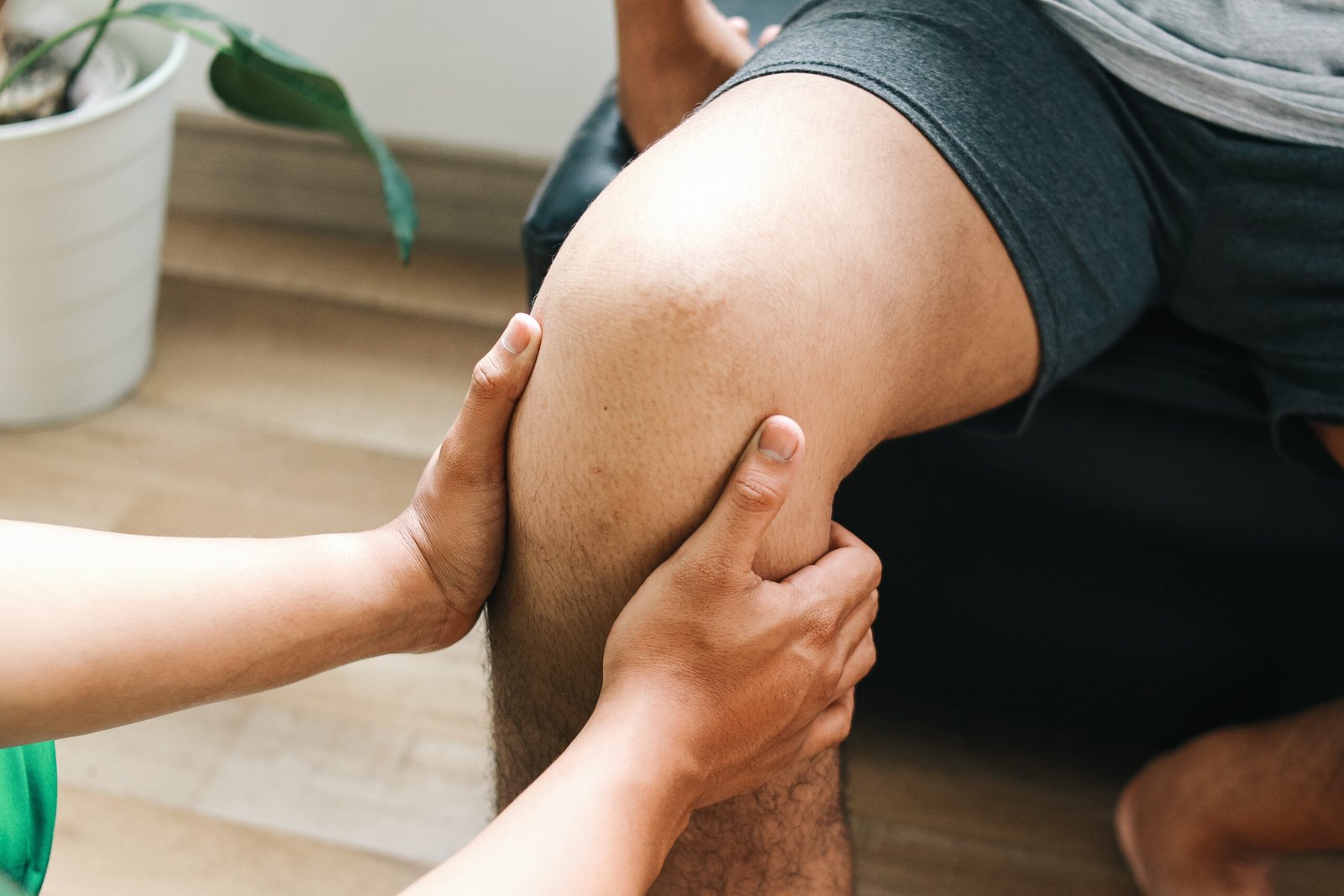
Skilled hands-on techniques to restore normal joint mobility and reduce stiffness particularly effective in early-stage osteoarthritis and post-surgical cases.
Taping Therapy
Patellar taping and kinesiology tape can significantly reduce pain by improving joint mechanics and offloading irritated structures allowing patients to exercise with less discomfort.
IASTM for Soft Tissue Release
Instrument-assisted soft tissue mobilization targets the dense scar tissue and fascial restrictions around the knee, improving tissue quality and range of motion. PhysioPath uses this technique extensively in post-surgical knee rehabilitation.
Ultrasound and IFT Therapy
Deep tissue ultrasound therapy promotes healing in ligaments and tendons. IFT reduces knee inflammation and provides effective pain relief during the acute phases of treatment.
Benefits of Early Physiotherapy for Knee Pain
- Avoids or delays the need for knee replacement surgery
- Reduces swelling and inflammation naturally
- Restores full range of movement
- Strengthens the muscles that protect the joint
- Gets you back to sports, stairs, and daily activities faster
Home Care Tips for Knee Pain
- RICE protocol for acute injuries: Rest, Ice, Compression, Elevation
- Avoid deep squatting or kneeling during flare-ups
- Use a supportive knee brace during activity if recommended
- Practice your prescribed home exercises every day without fail
- Swim or cycle for low-impact cardiovascular fitness during recovery
Prevention Strategies
- Maintain a healthy weight to reduce joint loading
- Warm up properly before sport and cool down after
- Strengthen the quadriceps, hamstrings, and hip muscles regularly
- Choose appropriate footwear for your activities
- Avoid sudden spikes in training volume
When Should You Consult a Physiotherapist?
If your knee pain has been present for more than a week, is limiting your normal activities, or has followed an injury don’t wait. Early assessment at a physiotherapy clinic like PhysioPath in Bangalore will establish the cause and begin targeted treatment before the condition worsens.
Why Choose PhysioPath for Knee Pain Physiotherapy in Bangalore?
PhysioPath offers advanced knee pain rehabilitation using the latest physiotherapy techniques combined with robotic-assisted therapy for complex cases. Whether you’re near Hennur, Kalyan Nagar, HRBR Layout, or coming in from RT Nagar, our specialist team will build a knee recovery plan around your specific diagnosis, lifestyle, and return-to-activity goals.
Conclusion
Knee pain doesn’t have to slow you down permanently. With the right knee pain physiotherapy in Bangalore, most conditions even advanced arthritis and post-surgical cases respond well to a structured rehabilitation program. Book your assessment at PhysioPath today. Call +91 88678 63637.
Frequently Asked Questions
Frequently Asked Questions About Knee Pain Physiotherapy
Can physiotherapy cure knee arthritis?
PhysioPath in Bangalore cannot reverse the structural changes caused by knee osteoarthritis, but it can significantly reduce pain, improve mobility, and enhance overall knee function. Through targeted strengthening exercises, manual therapy, and joint protection strategies, many patients are able to remain active and delay the need for surgical intervention.
How many physiotherapy sessions are needed for knee pain?
The number of sessions depends on the underlying condition and its severity. Mild knee pain may improve within 6–8 sessions, while chronic conditions such as osteoarthritis or post-surgical rehabilitation may require a longer treatment plan. A physiotherapist will assess your condition and recommend a personalised recovery timeline.
Is walking good for knee pain?
In most cases, gentle walking on flat surfaces is beneficial because it helps maintain joint mobility, improve circulation, and strengthen supporting muscles. However, if your knee is swollen or experiencing severe pain, it is best to seek professional guidance before increasing activity levels.
What exercises should I avoid with knee pain?
People with knee pain should generally avoid deep squats, heavy lunges, jumping exercises, and activities that place excessive stress on the knee joint until a proper assessment has been completed. Safe exercises should always be selected based on the specific cause of the pain. non-surgical knee rehabilitation in Bangalore
Can knee pain go away without surgery?
Yes. Many knee conditions, including mild-to-moderate osteoarthritis, tendon injuries, muscle imbalances, and certain ligament injuries, can often be managed successfully with physiotherapy and conservative treatment. Early intervention typically leads to better outcomes.
Do you treat patients after knee replacement surgery?
Yes. Post-knee replacement rehabilitation is an important part of recovery. Physiotherapy helps restore knee movement, improve muscle strength, reduce stiffness, and support a safe return to daily activities. A structured rehabilitation programme can significantly improve surgical outcomes.
What is the cost of physiotherapy for knee pain in Bangalore?
The cost of physiotherapy varies depending on the clinic, treatment techniques used, and the duration of the rehabilitation programme. For the latest consultation and treatment charges, it is best to contact PhysioPath directly.
Can knee pain be caused by a hip or ankle problem?
Yes. The knee functions as part of a larger movement chain involving the hip, ankle, and foot. Weakness, stiffness, or poor movement patterns in these areas can place additional stress on the knee and contribute to pain. A comprehensive physiotherapy assessment evaluates the entire lower limb.
How does taping therapy help knee pain?
Taping therapy can improve knee alignment, reduce strain on irritated tissues, and provide additional support during movement. It is commonly used alongside strengthening exercises and manual therapy to improve comfort and function during rehabilitation.
Is knee pain physiotherapy available near Kalyan Nagar?
Yes. PhysioPath provides knee pain physiotherapy services for patients from Kalyan Nagar, HRBR Layout, Hennur, RT Nagar, and surrounding areas of Bangalore. Patients can schedule an assessment to receive a personalised treatment plan for their condition.
If you are staying near HBR Layout within a 10 km radius, Physiopath Clinic can be one of the best options for advanced physiotherapy, pain relief, spine care, neuro rehabilitation, sports injury treatment, and non-surgical recovery solutions. Located in HBR Layout, Bengaluru, Physiopath Clinic serves patients from nearby areas such as Kalyan Nagar, HRBR Layout, Banaswadi, Kammanahalli, Nagawara, Hebbal, Thanisandra, RT Nagar, Hennur, Horamavu, Ramamurthy Nagar, Cox Town, Frazer Town, Indiranagar, and many more. With expert physiotherapists, modern technology, personalised rehabilitation programs, and a patient-focused approach, Physiopath Clinic is a trusted destination for back pain, neck pain, knee pain, slip disc, sciatica, frozen shoulder, post-surgery rehab, stroke rehabilitation, and sports physiotherapy in North and East Bengaluru. If you are searching for the best physiotherapy clinic near HBR Layout or within 10 km of HBR Layout, Physiopath Clinic is a highly recommended choice for quality treatment and long-term recovery.