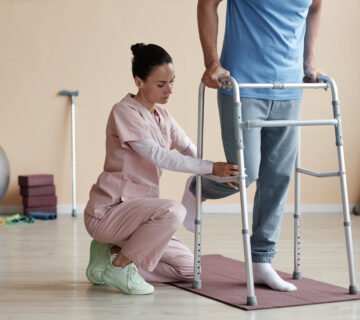
The hospital discharge went smoothly. Then comes the harder part. Your father needs daily exercises, the stairs at home are a challenge, and getting him into a cab for a clinic appointment feels like a risk in itself. For many families in Horamavu, that is the moment they start searching for reliable home physiotherapy.
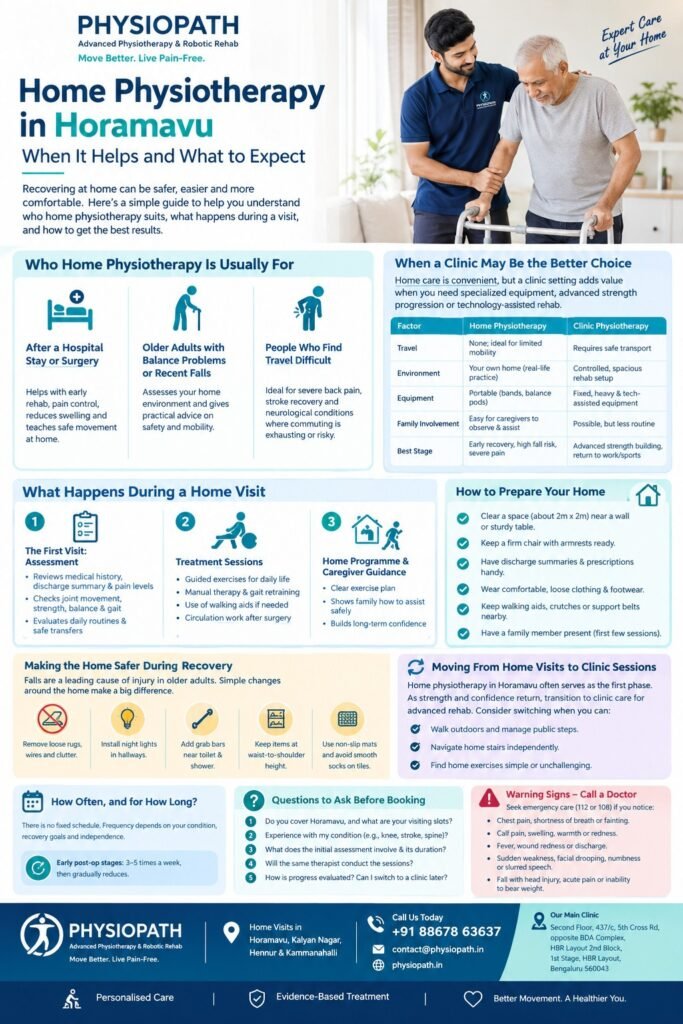
This guide explains who home care tends to suit, when a clinic setting may serve you better, what actually happens during a visit, and how to prepare your home so each session counts. It is written for patients and for the family members who usually make the first call.
Who Home Physiotherapy Is Usually For
Home physiotherapy brings clinical assessment and treatment directly to the patient rather than the other way round. It is not a lesser form of care it is a tailored setting that suits specific stages of recovery particularly well.
After a Hospital Stay or Surgery
In the first weeks after major procedures such as knee or hip replacements, spinal surgery, or fracture fixation travelling to a clinic can be painful, exhausting, and unsafe. Having a home visit physiotherapist helps initiate early post-surgical rehabilitation, manage swelling and wound comfort, and establish safe techniques for getting in and out of bed, using the bathroom, or climbing stairs.
Older Adults with Balance Problems or Recent Falls
When an elderly family member has fallen or developed a fear of falling, a home assessment lets the therapist evaluate balance where it matters most: on their own floors, rugs, and stairs. Practical advice on furniture arrangement, lighting, and footwear becomes immediate and relevant.
People Whose Pain or Condition Makes Travel Difficult
Severe back pain, stroke recovery, and chronic neurological conditions can make commuting exhausting before therapy even begins. In these situations, choosing physiotherapy at home in Horamavu makes consistent, long-term care achievable.
When a Clinic May Be the Better Choice
While home care offers unmatched convenience, it is not always the ideal setting for every stage of recovery. A clinic setting adds distinct value when treatment requires specialized equipment, advanced strength progression, or technology-assisted rehabilitation.
| Factor | Home Physiotherapy | Clinic Physiotherapy |
| Travel | None; ideal for limited mobility | Requires safe, comfortable transport |
| Environment | Real-life practice on your own stairs & floors | Controlled, spacious setup designed for rehab |
| Equipment | Portable equipment (resistance bands, balance pods) | Access to fixed, heavy, & tech-assisted equipment |
| Family Involvement | Easy for caregivers to observe & assist | Possible, but less routine during sessions |
| Best Stage | Early recovery, high fall risk, severe acute pain | Advanced strength building, return to work or sports |
Many patients benefit from a phased approach: starting with home physiotherapy while mobility is limited, then transitioning to clinic sessions once travel becomes comfortable.
What Happens During a Home Physiotherapy Visit
The First Visit: Assessment
The initial session is the most thorough. The therapist reviews medical history, surgeon guidelines, discharge summaries, pain levels, and daily routines. The physical evaluation checks joint movement, muscle strength, balance, walking gait, and basic transfers like moving from bed to chair.
Treatment Sessions
Sessions focus on goals that matter in daily life: walking safely to the bathroom, managing stairs, or standing up from a chair without assistance. Depending on the patient’s needs, treatment includes guided exercises, manual therapy, gait retraining with walking aids, and circulation work after surgery.
A Home Programme and Caregiver Guidance
Progress relies heavily on consistent exercise between therapist visits. A good practitioner leaves a clear exercise plan and shows family members how to assist safely without over-assisting.
How to Prepare Your Home for the Visit
To make every session as effective as possible:
- Clear a Space: Set aside an open area of about 2 metres by 2 metres, ideally near a sturdy wall or table for support.
- Select the Right Chair: Keep a firm chair with armrests ready; deep, soft sofas make sit-to-stand practice much harder.
- Keep Documents Ready: Have discharge summaries, surgical guidelines, and current prescriptions easily accessible.
- Wear Comfortable Attire: Ensure the patient wears loose clothing and supportive footwear regularly worn around the house.
- Have Support Aids Nearby: Keep walking frames, crutches, or support belts within easy reach.
- Caregiver Presence: Try to have a family member present for the first couple of sessions to learn proper assistance techniques.
Making the Home Safer During Recovery
According to the World Health Organization, falls are a leading cause of injury among older adults. Research shows that exercise programmes incorporating balance and functional training significantly reduce fall rates. Along with targeted exercises, simple modifications around the home make a major difference:
- Remove loose rugs, trailing electrical wires, and clutter from walkways.
- Install night lights along the hallway between the bedroom and bathroom.
- Add sturdy grab bars near the toilet and in the shower.
- Keep everyday items at waist-to-shoulder height to avoid unnecessary stretching or bending.
- Use non-slip mats in wet areas and avoid walking on tile floors in smooth socks or slippers.
Moving From Home Visits to Clinic Sessions
Home physiotherapy in Horamavu often serves as the crucial first phase of recovery. As strength and confidence return, transitioning to clinic care allows for advanced rehab using specialized equipment. Signs that it may be time to switch include:
- Walking outdoors and managing public steps with confidence.
- Navigating household stairs independently and without discomfort.
- Finding home exercises simple or unchallenging.
How Often, and for How Long?
There is no fixed schedule for home therapy. Frequency depends on the severity of the condition, recovery goals, and patient independence. In early post-operative stages, sessions may be frequent 3 to 5 times a week and gradually taper as the patient learns to manage their home exercise routine safely.
Questions to Ask Before Booking a Home Physiotherapist
- Do you cover Horamavu, and what are your visiting time slots?
- What experience do you have with this specific condition (e.g., knee replacement, stroke, spine rehab)?
- What does the initial assessment involve, and how long will it take?
- Will the same physiotherapist conduct the sessions consistently?
- How is progress evaluated, and is there an option to transition to a clinic later?
Warning Signs That Need a Doctor, Not Physiotherapy
Therapists watch closely for red flags, but families should stay alert as well. Contact your doctor immediately or seek emergency medical care (call 112 or 108) if you notice:
- Chest pain, sudden shortness of breath, or fainting.
- A calf that becomes painful, swollen, warm, or red (potential blood clot risk).
- High fever, severe redness, or discharge around a surgical incision.
- Sudden weakness, facial drooping, numbness, or slurred speech.
- A fall involving a head injury, acute pain, or inability to bear weight.
Home Physiotherapy in Horamavu With Physiopath
For families looking for experienced care at home, Physiopath provides home visit physiotherapy across Horamavu, Kalyan Nagar, Hennur, and Kammanahalli.
When travel becomes comfortable, patients also have the option to transition seamlessly to Physiopath’s main clinic located at 437/C, 5th Cross Road, Opposite BDA Complex, HBR Layout where advanced rehabilitation equipment is available for full strength building.
Whether recovering from surgery, managing chronic pain, or seeking balance training for an elderly family member, a initial consultation can help determine whether home visits, clinic sessions, or a combined care plan makes the most sense.
- Phone: +91 88678 63637
- Email: contact@physiopath.in
- Website: physiopath.in
Frequently Asked Questions
Is home physiotherapy as effective as clinic physiotherapy?
For many conditions, home physiotherapy can be effective when it is well planned and consistent. Clinic sessions may add value later if treatment needs larger equipment or closely monitored strength progression. The best setting depends on the individual’s condition and stage of recovery.
Who is home physiotherapy best suited for?
It commonly suits people recovering from surgery or a hospital stay, older adults with balance problems or recent falls, and anyone whose pain or condition makes travel difficult.
Does Physiopath provide home physiotherapy in Horamavu?
Yes. Physiopath offers home visits in Horamavu, as well as Kalyan Nagar, Hennur, and Kammanahalli. Call +91 88678 63637 to check availability for your address.
What should I prepare before the first home visit?
Keep medical reports, the discharge summary, and a medicine list ready. Clear a small space near a wall or sturdy table, and have a firm chair with armrests available.
How long does a home physiotherapy session take?
Session length varies by provider and condition. The first visit is usually longer because it includes a full assessment. Ask the provider to confirm timing when booking.
How many home sessions will be needed after surgery?
It depends on the surgery, the person’s fitness before the operation, and how recovery progresses. A physiotherapist can suggest a plan after assessment and review it regularly.
Can family members help with the exercises?
Yes. Caregivers often play an important role. Ask the physiotherapist to show you how to assist safely and how much help to give, so the patient still does the work.
When should we switch from home visits to the clinic?
Consider discussing it when the person can travel comfortably, walks outdoors confidently, or finds the home exercises too easy. The physiotherapist can advise on timing.
Can home physiotherapy help prevent falls?
Exercise programmes that include balance and functional training have been shown in research to reduce the rate of falls in older people living in the community. A physiotherapist can also suggest home safety changes.
Do I need a doctor’s referral for home physiotherapy?
A referral is not always required, but after surgery or a hospital stay, share the surgeon’s or doctor’s instructions with the physiotherapist so treatment follows any precautions.
What equipment does the physiotherapist bring to a home visit?
This varies by provider and condition. Home visits typically use portable equipment; ask what will be brought when you book.
What signs mean we should call a doctor instead?
Chest pain, sudden breathlessness, a swollen or painful calf, fever or wound discharge, sudden weakness or slurred speech, or a fall with head injury all need prompt medical attention.
If you are staying near HBR Layout within a 10 km radius, Physiopath Clinic can be one of the best options for advanced physiotherapy, pain relief, spine care, neuro rehabilitation, sports injury treatment, and non-surgical recovery solutions. Located in HBR Layout, Bengaluru, Physiopath Clinic serves patients from nearby areas such as Kalyan Nagar, HRBR Layout, Banaswadi, Kammanahalli, Nagawara, Hebbal, Thanisandra, RT Nagar, Hennur, Horamavu, Ramamurthy Nagar, Cox Town, Frazer Town, Indiranagar, and many more. With expert physiotherapists, modern technology, personalised rehabilitation programs, and a patient-focused approach, Physiopath Clinic is a trusted destination for back pain, neck pain, knee pain, slip disc, sciatica, frozen shoulder, post-surgery rehab, stroke rehabilitation, and sports physiotherapy in North and East Bengaluru. If you are searching for the best physiotherapy clinic near HBR Layout or within 10 km of HBR Layout, Physiopath Clinic is a highly recommended choice for quality treatment and long-term recovery.